Image | AI-generated
PR Begins in the Breakroom: Why Your Digital Transformation Fails Without Your People
World market leaders are born on German factory floors. But while machinery is being trimmed for Industry 4.0, complex IT infrastructures are being rebuilt, and the hype surrounding “Artificial Intelligence” currently overshadows every other topic, one decisive factor is far too often left behind: the human being. Anyone who digitally reinvents their company but forgets internal communication risks not only motivation but undermines the very foundation of their success.
The Trap of “Silent Transformation”
In the “Mittelstand” (SME sector), we love execution. Engineers build, engineers optimize, engineers deliver! This is a great achievement of our economy. However, during digital transformation, many executives make a classic mistake: they treat change like a software update. You install it over the weekend and expect everyone to be running the new version by Monday.
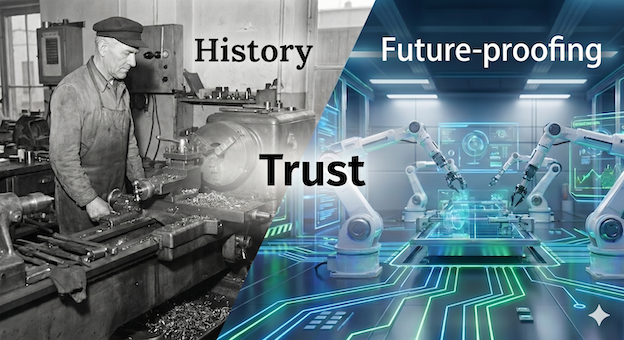
But humans do not function binarily. When a company that has stood for mechanical excellence for 50 years suddenly starts talking about “Digital-First” and “Agility,” a vacuum is created among long-term employees. And in this vacuum, it is not innovation that grows, but resistance.
PR is Not Just an “External Topic”
Many understand PR (Public Relations) only as the press release sent to the outside world or a polished LinkedIn presence. But true PR begins internally. In this case, it means: internal communication is the marketing department for change. When employees tell stories at their local club or during a school barbecue like, “Things are really running smoothly digitally at our place, we are ready for tomorrow,” that is more valuable than any newspaper advertisement.
If your employees do not understand why a change is happening, they become the sand in the gears of the new digital machine. If you lose your people, you lose the implicit knowledge that made the Hidden Champion a champion in the first place.
Three Pillars of Taking Your Team Along for the Reinvention:
- The Story Behind the Code: Technology alone does not inspire anyone who is proud of their craft. Do not explain the “What,” but the “Why.” Digitalization is not an end in itself—it is the tool to ensure the quality the team has stood for for decades remains viable in the future. “We are keeping our roots, but changing to attack new market fields and thus secure our future and conquer market leadership.”
- From Affected Party to Creator: PR means dialogue. Give the experts at the machines a voice in the digital process. Those who help design the user interface will not sabotage it later. Innovation needs psychological safety: “We want to know from you—what do you need at your workplace to make the job more comfortable, faster, or easier?”
- Transparency Over Perfection: Nothing is more toxic than the “grapevine” created by a lack of information. Communicate milestones—even the difficult ones. An honest “We don’t know everything yet, but we are walking this path together” creates more trust than any glossy brochure.
Conclusion: Hardware is Replaceable – Culture is Not
Digital transformation is 20% technology and 80% psychology. Anyone who wants to evolve from a Hidden Champion to a digital thought leader should manage their communication as precisely as their manufacturing tolerances.
PR is the life insurance for your transformation. Because ultimately, it is not the algorithms that move your company forward—it is the people who operate them.